

Size Does Matter
When a small drawing no longer fits inside the sketchbook
desliza hacia abajo para leer en español
I never thought size would complicate my life. But here I am, standing in front of a 100×70 cm sheet of paper, because after years of drawing in sketchbooks I felt the need to challenge myself, to step out of my comfort zone and see what happens when an everyday scene stops living small and begins to occupy a much bigger space.
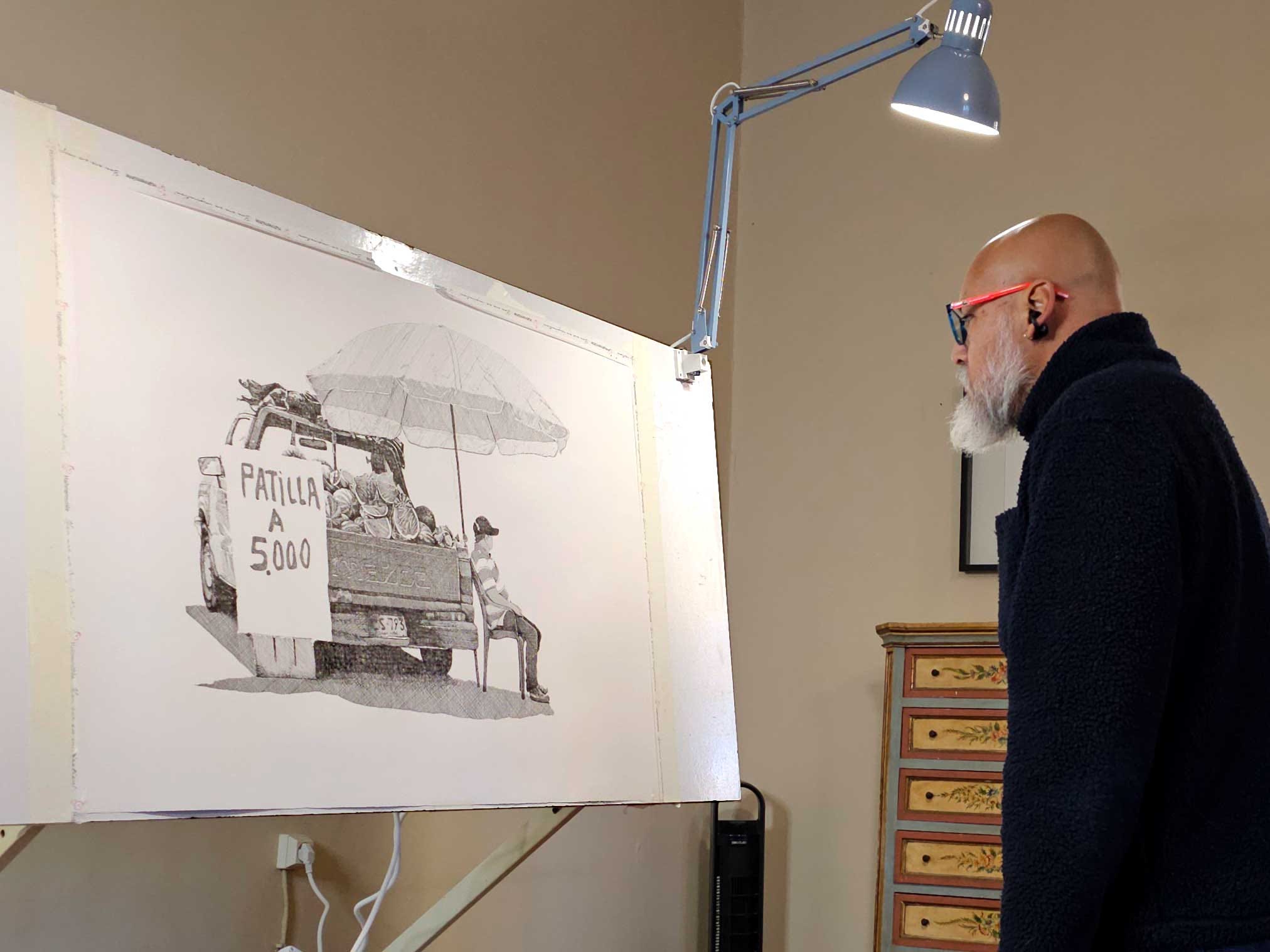
I’ve always been drawn to the simple elements that define a place without even trying. I’m not talking about big landmarks or official symbols, but those small, ordinary things that become part of an emotional landscape: a power pole, a street vendor, the way people dress, the traditional materials used in local buildings. To me, these quiet details, more than any postcard, are what truly make a place unique.


Street vendors in Colombia had already lived for years inside my sketchbooks. That’s where they stayed: small, intimate, protected. But now, for the first time in a long time, I felt the urge to see them big. I’m curious to understand how an everyday scene transforms when you enlarge it, when you let it breathe and allow it to take up more space than you’re used to giving it.
Technically, this shift has also shaken things up. I usually draw with ultra-fine nibs, mostly a 0.05, because I’m obsessed with the texture they create, the richness of the blacks, those depths that only appear when you stack very thin lines. For this larger format I went up just a bit, to a 0.2, enough to keep the personality of the fine line without losing myself in the scale. So I’m exploring new territory while still feeling like myself.
And as I move forward, I realize these street vendors aren’t just characters in the urban landscape. They’re part of the emotional geography of my childhood in Ibagué. I grew up hearing their voices: the man shouting “oranges, oranges!”, the one selling forcha (a delicious fermented foam), the cheesemaker... Their calls are unforgettable hymns for those of us who grew up with them, an everyday soundtrack you take for granted when you’ve heard it your whole life, but one that doesn’t exist anywhere else in the world.
Maybe that’s why I needed to see them large: because bringing these scenes out of the safety of my sketchbook and onto a big sheet of paper feels like sharing something both ordinary and deeply personal. A part of my memory. My Colombian roots. The place that keeps shaping me, even when I’m far away.
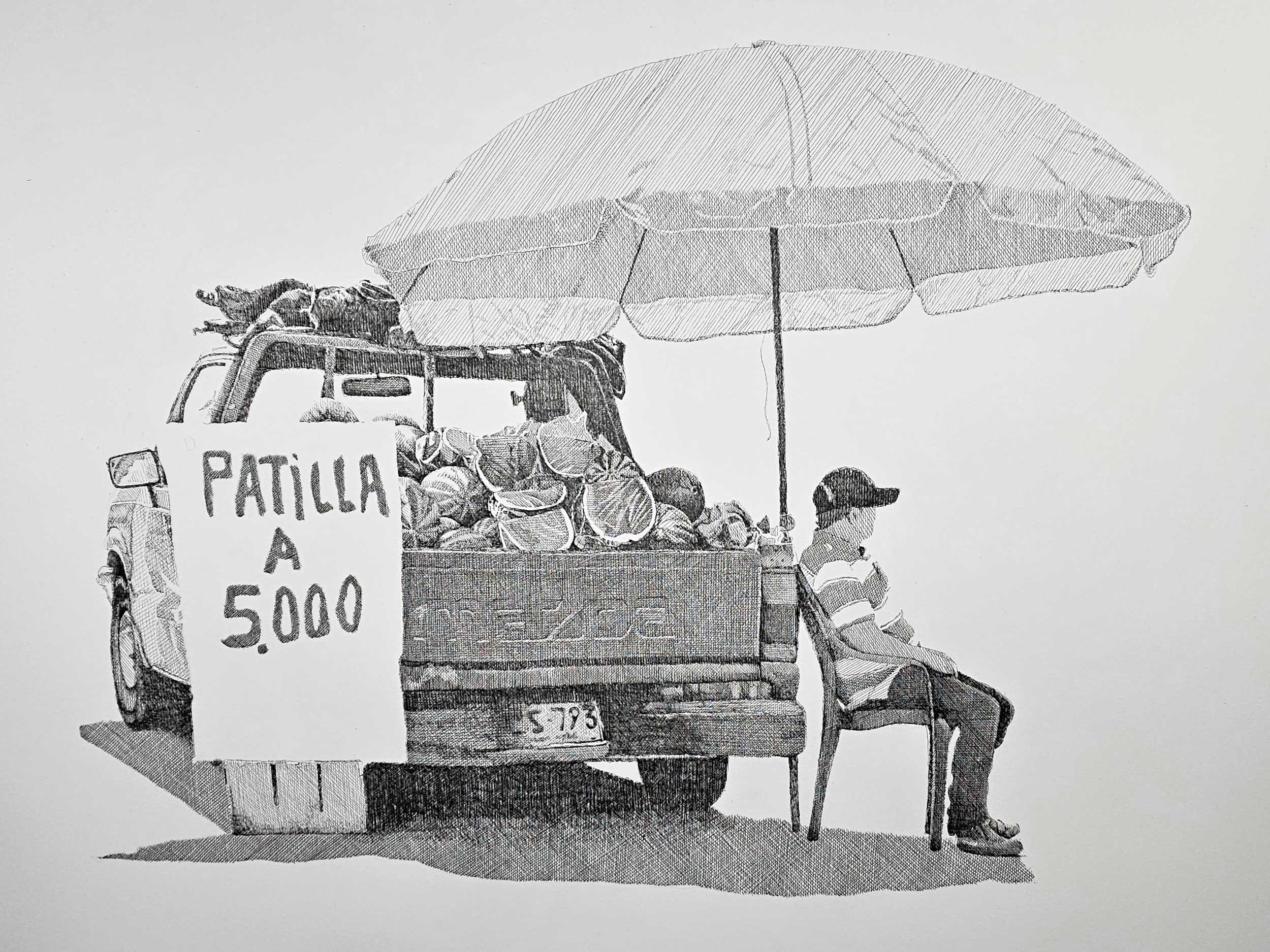
I don’t know exactly where this new path will lead, but for now I’m enjoying the feeling of enlarging the everyday and discovering what stories emerge when I give them a bit more space.
Thanks for joining me in this shift of scale.
See you in the next stroke.
Español:
El tamaño sí importa
Cuando un dibujo pequeño deja de caber en mi libreta.
Nunca pensé que el tamaño fuera a complicarme la vida. Pero aquí estoy, frente a un papel de 100×70, porque después de años dibujando en libretas sentí la necesidad de retarme, de salir de la zona de confort y probar qué pasa cuando una escena cotidiana deja de vivir en pequeño y empieza a ocupar otro espacio, uno más grande.
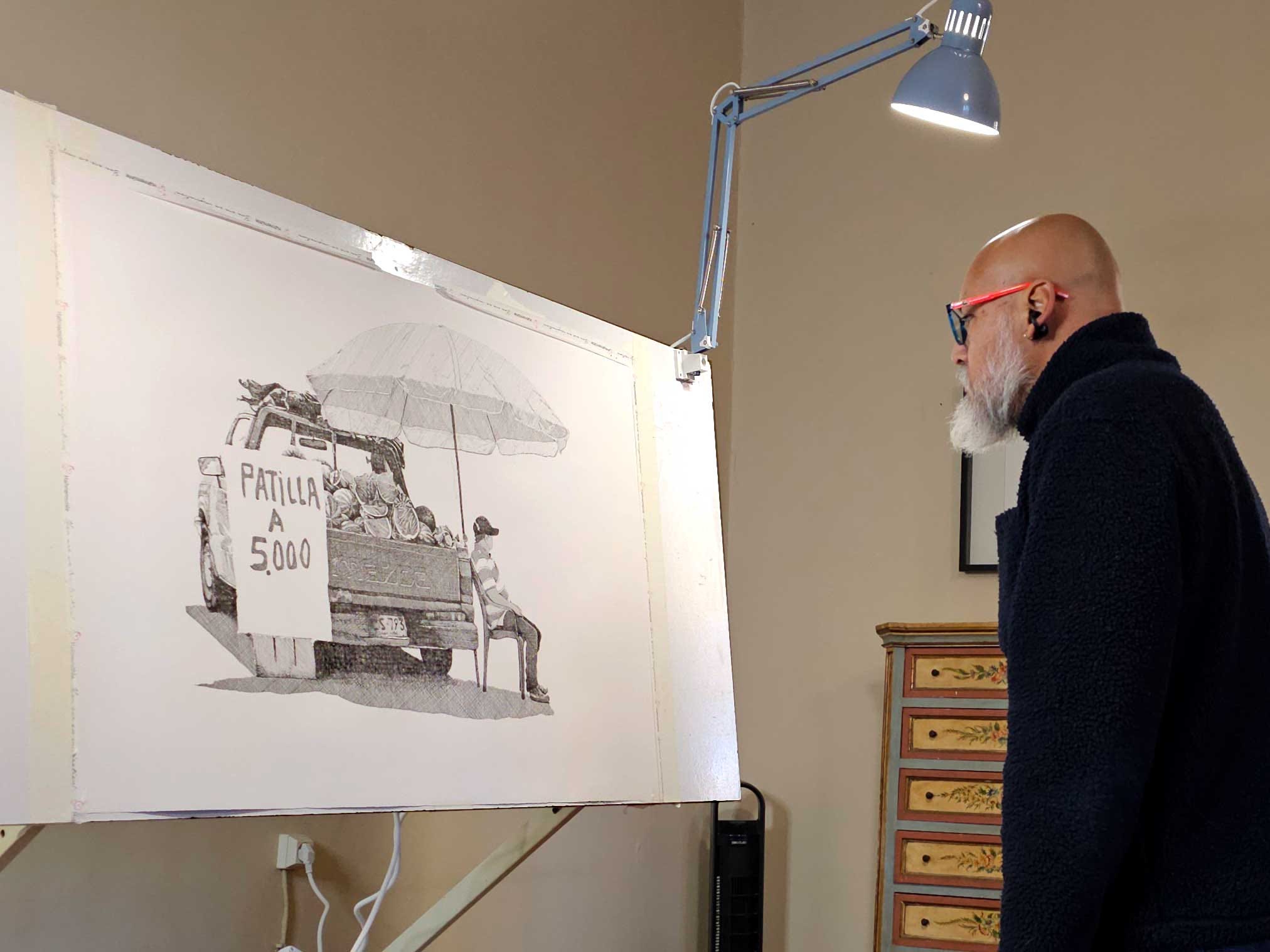
Siempre me han atraído los elementos sencillos que definen un lugar sin proponérselo. No hablo de los grandes hitos ni de los símbolos oficiales, sino de esas pequeñas cosas que se vuelven parte del paisaje emocional: un poste de luz, un vendedor ambulante, una manera de vestir, los materiales tradicionales de construcción. Para mí, son estos detalles, más que cualquier postal, los que hacen que un sitio sea verdaderamente único.


Los vendedores ambulantes en Colombia ya habían vivido durante años en las páginas de mis libretas. Allí se quedaban: pequeños, íntimos, protegidos. Pero ahora, por primera vez en mucho tiempo, sentí que quería verlos en grande. Me intriga entender cómo cambia una escena cotidiana cuando la amplías, cuando le das aire y dejas que ocupe más espacio del que estoy acostumbrado a ofrecerle.
Técnicamente, este cambio también me ha movido el piso. Yo suelo dibujar con puntas ultrafinas, un 0.05, porque me obsesiona la textura que generan, la riqueza de los negros, esas profundidades que solo aparecen cuando acumulas líneas muy delgadas. En este formato grande subí apenas un poco el grosor, a un 0.2, lo justo para no perder esa personalidad de la línea fina. Así que estoy explorando un territorio nuevo sin dejar de ser yo.
Y mientras avanzo, me doy cuenta de que estos vendedores ambulantes no son simples personajes de calle. Son parte de la geografía emocional de mi infancia en Ibagué. Crecí escuchando sus voces: el que gritaba “la naranja, la naranja”, el que vendía la Forcha (una espuma fermentada y deliciosa), el de los quesillos… Sus cantos son himnos inolvidables para quienes crecimos con ellos. Esa banda sonora cotidiana que uno da por sentada cuando la ha oído toda la vida, pero que no existe en ningún otro lugar del mundo.
Tal vez por eso necesitaba verlos en grande: porque al sacar estas escenas del refugio de la libreta y llevarlas al papel, siento que estoy compartiendo algo profundo y mundano a la vez. Una parte de mi memoria. De mi origen colombiano. De ese lugar que sigue definiéndome incluso cuando no estoy allí.
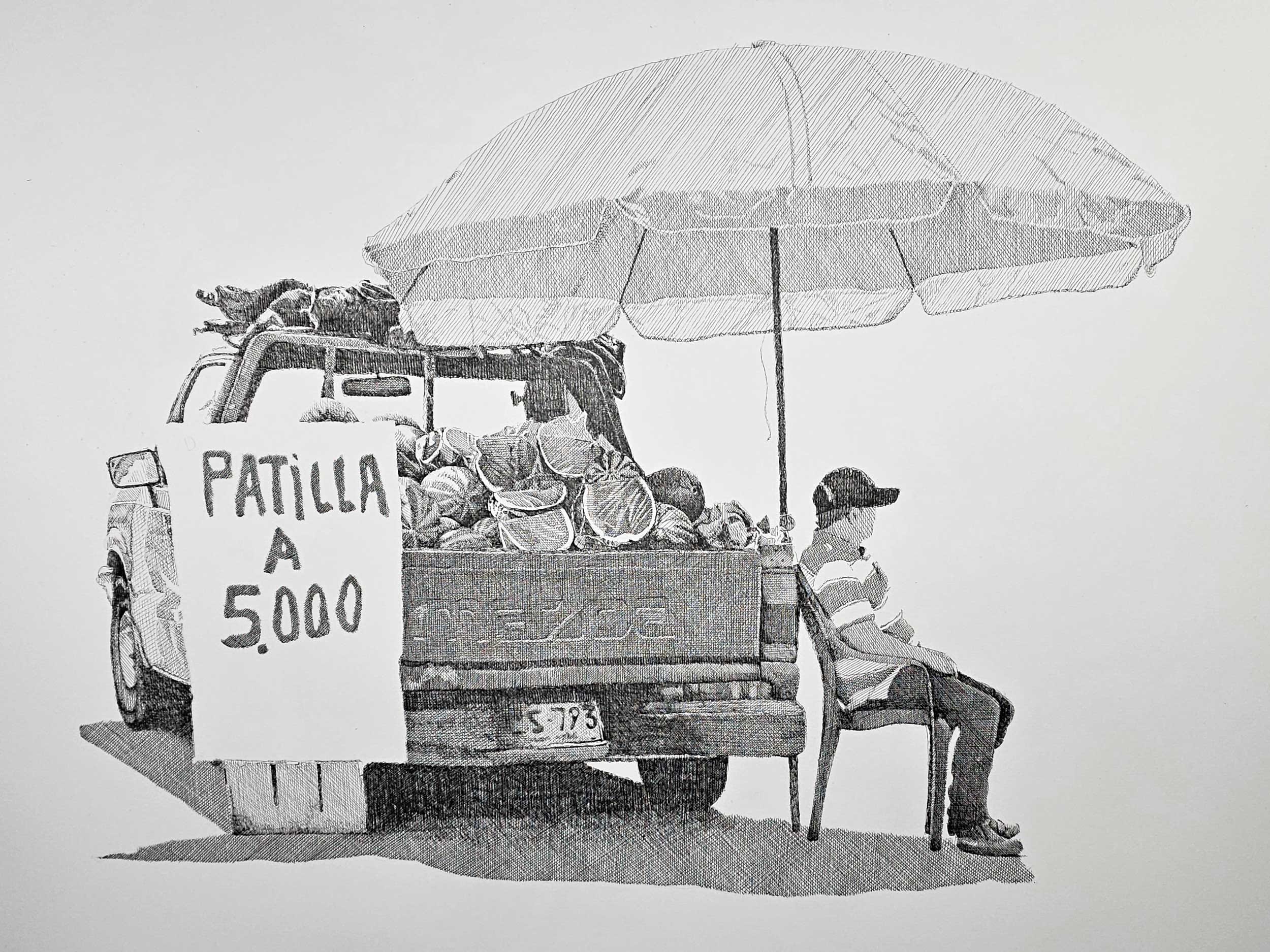
No sé exactamente a dónde me llevará este nuevo camino, pero por ahora estoy disfrutando la sensación de ampliar lo cotidiano y ver qué historias revelan cuando les doy un poco más de espacio.
Gracias por acompañarme en este cambio de escala.
Nos vemos en el próximo trazo.
¡Espectacular! 😍
(bendito pulso tienes).
Me Parece David que, ese camino, ya lo iniciaste hace meses. Indudablemente va a cambiar tu trabajo.
Personalmente siento la necesidad de conservar cosas no materiales que me unen a mi padre: imágenes de lugares que ya han cambiado, olores de cosas que compartimos ,sonidos de lugares de trabajo, etc...para mi todo eso rescata emociones que echo de menos.
Un abrazo.